Elon Musk ostře proti zákonu o výdajích: hrozí založením nové strany
Elon Musk, generální ředitel Tesly (TSLA) a SpaceX, sice nedávno prohlásil, že se stahuje z politického dění, ale v praxi se rychle vrátil do první linie americké politické debaty. Na své sociální síti X v pondělí vystoupil proti návrhu zákona, který Senát projednával před závěrečným hlasováním, a který označil za „největší zvýšení dluhu v historii USA“. Svými ostrými výroky znovu rozvířil nejen napětí ve Washingtonu, ale i napjatý vztah s bývalým prezidentem Donaldem Trumpem.

Musk na síti X bez obalu zaútočil na zákon i na politiky, kteří jej podporují:
„Každý člen Kongresu, který vedl kampaň za snížení vládních výdajů a poté okamžitě hlasoval pro největší zvýšení dluhu v historii, by se měl stydět! A pokud to bude poslední věc, kterou na této Zemi udělám, příští rok prohrají primárky,“ napsal.
V ten samý den ještě přitvrdil: pokud „šílený zákon o výdajích“ projde, následující den založí politickou formaci s názvem America Party. Podle něj Spojené státy potřebují alternativu ke „dvoupólovému systému“ demokratů a republikánů. Tím naznačil, že je připraven vyrazit i mimo tradiční politické rozdělení, pokud nebude možné prosazovat změnu zevnitř.
Muskova kritika se netýká jen aktuálního zákona. Už několik týdnů zpochybňuje politiku Trumpovy administrativy, zejména návrh na zvýšení dluhového stropu o rekordních 5 bilionů dolarů. Zákon, který měl podle prezidenta Trumpa podpořit ekonomický růst, označil Musk za „dluhové otroctví“.
Není překvapením, že se mezi Muskem a Trumpem rozhořela veřejná hádka, která podle všeho kulminovala právě v souvislosti s tímto legislativním návrhem. Ačkoliv Musk dříve Trumpa a další republikány finančně podporoval – podle záznamů Federální volební komise jeho PAC America utratila více než 275 milionů dolarů – nyní se zdá, že jejich vztahy jsou vážně narušeny.
Zmiňovaná hádka vyvrcholila v době, kdy Senát diskutoval návrh, který podle odhadů Kongresového rozpočtového úřadu (CBO) zvýší americký deficit o 3,3 bilionu dolarů během příštích deseti let. Pro srovnání: návrh, který dříve schválila Sněmovna reprezentantů, by zvýšil deficit o 2,4 bilionu. Senátní verze je tedy nejen dražší, ale obsahuje také hlubší daňové škrty, méně úspor a některá opatření k navýšení příjmů.
Muskova slova o založení nové politické strany nejsou poprvé. Už před několika týdny v sérii příspěvků na X hovořil o potřebě nové formace. V pondělí na to navázal a zdůraznil, že země se nachází v režimu „Porky Pig Party“ – narážka na karikaturu, která má podle něj symbolizovat marnotratnost a nekompetenci.
Navzdory kritice však Musk uvedl, že ztráta dotací pro elektromobily a solární energii není hlavním důvodem jeho odporu vůči zákonu. Tvrdí, že hlavním problémem je skutečnost, že návrh zákona „rozdává dary průmyslovým odvětvím minulosti a zároveň vážně poškozuje průmyslová odvětví budoucnosti“. Podle něj zákon nijak nepodporuje technologický rozvoj, ale naopak brzdí inovace.
I přesto, že Musk v květnu v rozhovoru tvrdil, že plánuje omezit výdaje na politiku, protože „už udělal dost“, jeho pondělní výstupy naznačují opak. Naopak – jeho závazek podpořit kandidáty, kteří vyzvou stávající členy Kongresu v primárních volbách, je dosud nejkonkrétnější politickou hrozbou, jakou z jeho strany zazněla od doby, co opustil pozici neoficiálního poradce Bílého domu.
Zákon, který je v centru celé debaty, má podle Bílého domu vést ke snížení deficitu a uvolnění ekonomického růstu. Kritikové ale upozorňují, že do výpočtů nebyly zahrnuty náklady na prodloužení daňových škrtů z roku 2017, které Trumpova administrativa v minulosti prosazovala. Bez těchto údajů se podle Muska i dalších analytiků zkresluje skutečný dopad zákona na federální finance.
Musk dlouhodobě podporuje tvrdý postoj k nelegální imigraci, včetně deportací a uzavřených hranic – tedy opatření, která jsou v souladu s Trumpovou agendou. I to podtrhuje, že jeho nesouhlas se zákonem není ideologický, ale rozpočtový a strategický. Vidí v návrhu zákona zásadní hrozbu pro fiskální zdraví USA a důvod k razantní změně politického kurzu.
The EUR/USD currency pair continued to trade on Wednesday as if at a wake; however, we warned at the beginning of the week that volatility was decreasing and the market was no longer reacting to the flow of news. The market is simply tired of a hundred messages every day on the topic of the conflict in the Middle East and negotiations between Iran and the US. It receives no credible information. Almost all the information comes from the White House, close associates of Donald Trump, or "insider" sources linked to Trump (for example, Axios). Thus, every day, traders are not only faced with one side of the coin but also forced to react to the constantly changing rhetoric of the American president.
The apotheosis of absurdity came on Tuesday when Trump once again reported productive negotiations with Iran, and just a few hours later, American forces launched new strikes along the coast of Iran near the Strait of Hormuz. After this event, it is evident that "positive negotiations" exist only in Trump's mind; no deal, at this time (not even an interim one), is in sight, and the ceasefire could collapse any day, given that both sides of the conflict regularly violate it.
A separate topic for discussion is the so-called "nuclear issue." Over the past two weeks, Trump has repeatedly stated that Iran allegedly agreed to export enriched uranium outside its territory. Earlier, various insiders shared information that Iran might agree to a moratorium on uranium enrichment for 10-15 years. There was also information that Trump demands that Iran close all nuclear facilities and laboratories. And do you know how this story ended? The Deputy Secretary of the Supreme National Security Council, Ali Bagheri Kani, stated that enriched uranium is not even a subject of negotiations with Washington. In other words, Iran will not give up uranium enrichment or its own stocks under any conditions. What Trump talks about in every interview remains unclear.
Kani also stated that shipping through the Strait of Hormuz "will never be the same again." Most likely, the Iranian official means that control over Hormuz will become much stricter, and a fee will be charged for commercial vessels passing through. Thus, the Strait of Hormuz is unlikely to ever become "safe and free," no matter what the U.S. president says.
What can be said in conclusion? As usual, all statements made by Trump in recent weeks should be divided by eight, then the result should be subtracted by a minus sign, then divided by zero, and the square root extracted from what is obtained. Only in this case can one approximately understand the actual state of affairs. Representatives of Iran repeatedly refute almost all statements from the American side. The ceasefire is maintained, but progress in negotiations is insignificant and does not concern key issues.
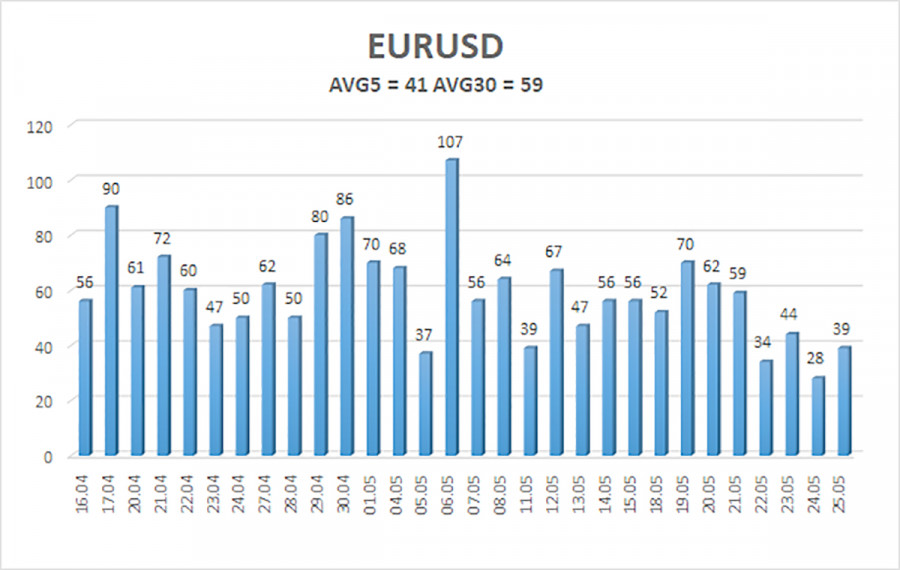
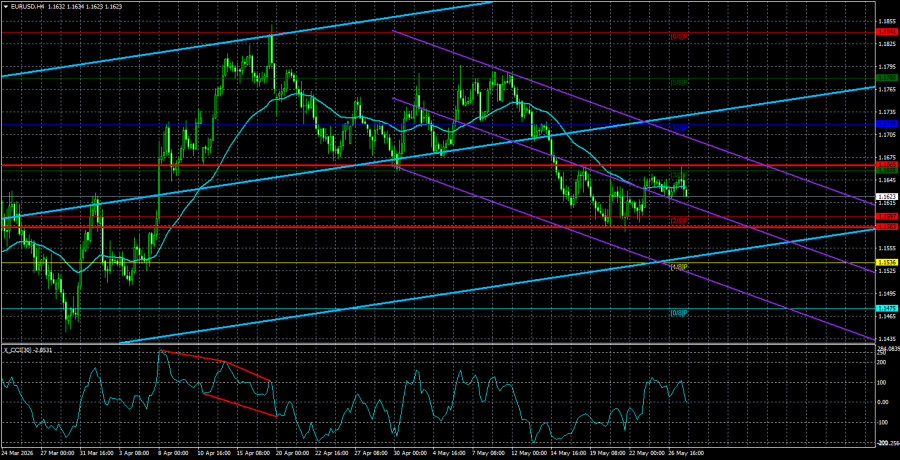
The average volatility of the EUR/USD currency pair over the past 5 trading days as of May 28 is 41 pips and is characterized as "low." We expect the pair to move between levels 1.1583 and 1.1665 on Thursday. The upper line of the linear regression channel has turned upwards, indicating a trend change to bullish. In fact, the bullish trend of 2025 could have resumed a month ago. The CCI indicator has entered the overbought area and formed two "bearish" divergences, signaling the start of a downward correction that is still underway.
S1 – 1.1597
S2 – 1.1536
S3 – 1.1475
R1 – 1.1658
R2 – 1.1719
R3 – 1.1780
The EUR/USD pair continues its downward movement, which is presumed to be a correction within the broader global bullish trend. The global fundamental background for the dollar remains extremely negative, and only geopolitical factors regularly provide it with support. When the price is below the moving average, short positions can be considered with targets of 1.1583 and 1.1536. Above the moving average line, long positions are relevant with targets of 1.1780 and 1.1841. The market has been moving away from geopolitical factors, but in recent weeks, the dollar has been in demand as market hopes for peace in the Middle East have weakened.
The linear regression channels help to determine the current trend. If both are directed in the same way, then the trend is currently strong;
The moving average line (settings 20,0, smoothed) determines the short-term trend and the direction in which trading should now be conducted;
Murray levels are target levels for movements and corrections;
Volatility levels (red lines) are the potential price channel in which the pair will move over the next 24 hours, based on current volatility readings;
The CCI indicator – its entry into the oversold area (below -250) or into the overbought area (above +250) indicates that a trend reversal in the opposite direction is approaching.

LINKS RÁPIDOS
ForexMart is authorized and regulated in various jurisdictions.
(Reg No.23071, IBC 2015) with a registered office at First Floor, SVG Teachers Co-operative Credit Union Limited Uptown Building, Corner of James and Middle Street, Kingstown, Saint Vincent and the Grenadines
Restricted Regions: the United States of America, North Korea, Sudan, Syria and some other regions.









 Contate-nos