Global financial markets remain in a state of extreme tension and uncertainty. The unresolved conflict in the Middle East, growing tensions between Washington and Beijing — which Donald Trump failed to ease during his trip to China — as well as the risks of continued global inflation growth, are all prompting investors to exercise a high degree of caution.
Against this backdrop, the sell-off in government bonds issued by countries belonging to the Western bloc of the global economy continues. These sell-offs are linked to growing concerns that high crude oil prices will only increase inflationary pressure, which could ultimately lead to higher interest rates. In such a scenario, holding government bonds becomes less attractive, which is reflected in falling bond prices and rising yields.
In this context, the currency market is effectively witnessing the beginning of a struggle between the U.S. dollar and the major currencies traded against it. Market participants are speculating about who will prevail in this confrontation — the dollar or its counterparts — as the risk of rising inflation and, consequently, higher interest rates increases with each passing day.
Now let us examine the strengths and weaknesses of these currencies. Previously, the euro and the pound received support from expectations of two or three interest rate hikes amid surging inflation. However, the government crisis in Britain and the difficult economic situation in continental Europe are restraining these currencies against the dollar.
At the same time, the outlook for the U.S. dollar has also changed significantly in recent months. Most notably, the sharp rise in consumer inflation in the United States has already triggered expectations of Federal Reserve rate hikes.
In effect, expectations of higher rates in the U.S. are offsetting the strength of currencies traded against the dollar. However, unlike those currencies, the dollar has another strong supporting factor — its status as a safe-haven currency amid the current global instability. It is precisely this factor that continues to support the greenback.
Given these conditions, I believe the trend toward gradual strengthening of the U.S. dollar in the Forex market will continue today.
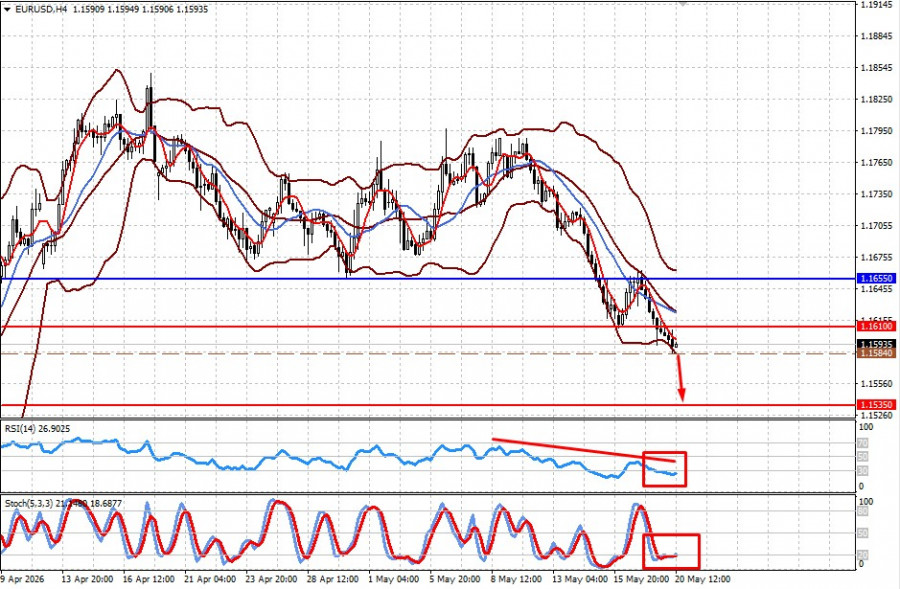
The pair has already declined to the previous local target level of 1.1610 and moved below it. If the broader trend remains intact, the pair may continue falling toward 1.1535. The 1.1584 level may serve as a point for opening short positions.
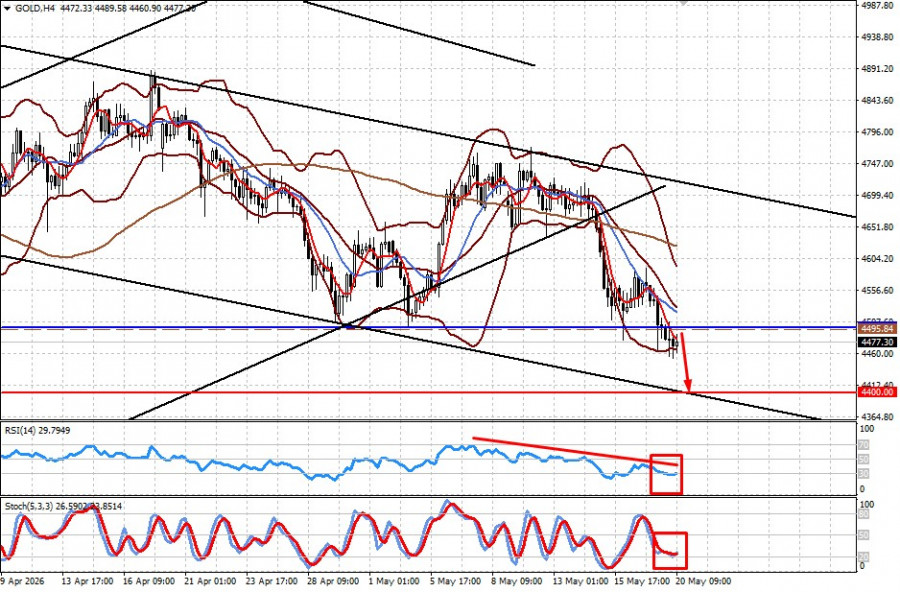
Gold prices remain in a short-term downward trend and, amid the general wave of pessimism in the markets, may continue declining toward 4400.00 after a possible minor recovery to 4500.00. The 4495.84 level may serve as a point for opening short positions.
LINKS RÁPIDOS
ForexMart is authorized and regulated in various jurisdictions.
(Reg No.23071, IBC 2015) with a registered office at First Floor, SVG Teachers Co-operative Credit Union Limited Uptown Building, Corner of James and Middle Street, Kingstown, Saint Vincent and the Grenadines
Restricted Regions: the United States of America, North Korea, Sudan, Syria and some other regions.








 Contate-nos