Washington a Tokio diskutují o možnosti vytvoření fondu, který by realizoval rozsáhlé investice do amerických technologií a infrastruktury.
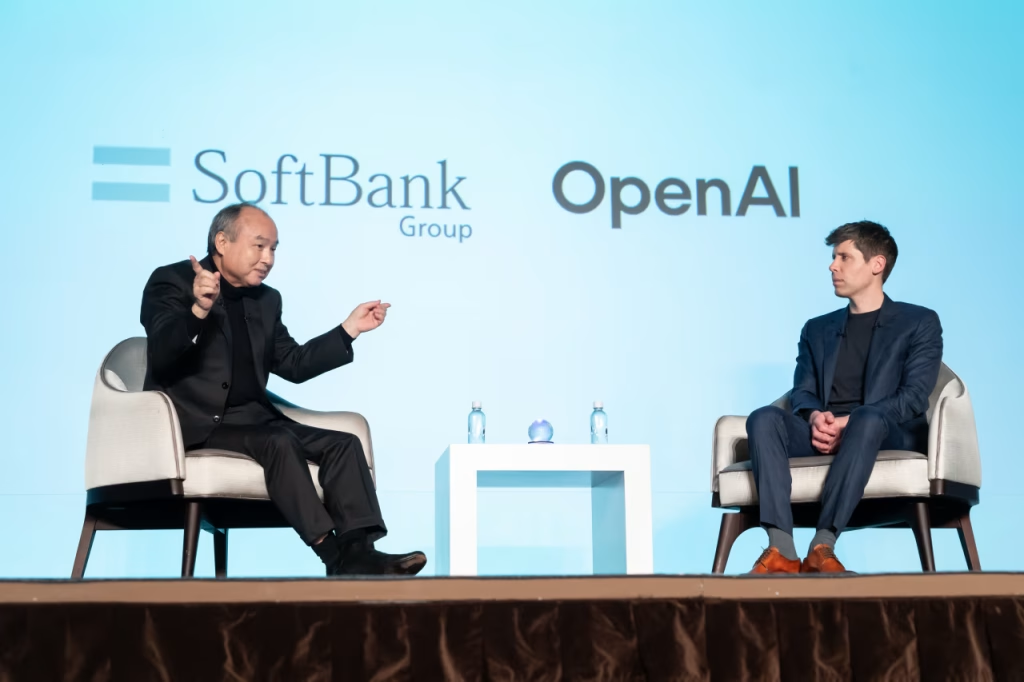
Masayoshi Son, zakladatel SoftBank (SFTBY), přišel s odvážnou vizí: vytvořit společný americko-japonský státní investiční fond, který by prostřednictvím masivních investic posílil technologickou a infrastrukturní páteř Spojených států. Tato myšlenka, která byla v posledních týdnech projednávána na nejvyšší politické úrovni ve Washingtonu i Tokiu, by se mohla stát precedentem pro novou formu mezinárodní finanční spolupráce mezi suverénními státy.
Nápad společného fondu byl prezentován americkému ministrovi financí Scottu Bessentovi a podle osob obeznámených se situací byl diskutován i s japonským premiérem Šigeru Ishibou. Přestože dosud nevznikl formální návrh, fond je vnímán jako potenciální „milník“ v jednáních mezi USA a Japonskem, zejména v kontextu připravované obchodní dohody. Japonci chtějí prosadit nulová cla, zatímco americká strana trvá na základním 10% clu – fond tak může sehrát roli mostu mezi protichůdnými zájmy.
Podle návrhu by fond spoluvlastnily a spoluspravovaly ministerstva financí obou zemí, s možností přizvat další omezené partnery nebo dokonce širokou veřejnost. Kapitál fondu by mohl vstupně činit až 300 miliard dolarů, přičemž by byl podpořen významným zadlužením, aby mohl realizovat investice ve skutečně velkém měřítku.
Dle zasvěcených osob má fond sloužit jako zdroj přímých příjmů pro obě vlády, na rozdíl od klasických daňových pobídek. V minulosti americká vláda poskytovala daňové úlevy výměnou za výstavbu továren nebo infrastruktury – přímé zisky však nezajišťovala. Nový přístup by měl podle Bessenta splňovat cíl financování státu bez zvyšování daní a zároveň vytvářet stabilní rámec pro bilaterální investice mimo dosah ad hoc politických rozhodnutí.

Zatímco americká strana hledá nový způsob, jak stabilizovat veřejné finance, Japonsko podle všeho usiluje o předvídatelný a institucionálně zakotvený systém, který by omezil riziko jednostranných kroků Bílého domu. Kombinace těchto cílů dává fondu nečekanou politickou i finanční přitažlivost.
Son, který je blízkým spolupracovníkem Donalda Trumpa, se účastnil jeho prosincového setkání v Mar-a-Lago a zřejmě doufá, že v případném fondu bude hrát významnou roli při rozhodování o investicích. Podle zdrojů blízkých jeho týmu se jedná o strategii, jak spojit státní kapitál s technologickými megaprojekty, jakým je například plán Stargate v hodnotě 500 miliard dolarů – společná iniciativa OpenAI, Oracle a SoftBank na budování AI infrastruktury v USA.
Projekt Stargate je potenciálně ideálním kandidátem pro financování z budoucího fondu, přičemž Son sází na to, že jeho propojení s Trumpem a předními technologickými hráči mu poskytne přímý vliv na rozdělování prostředků. V této souvislosti je zřejmé, že Son nevnímá fond jen jako diplomatický nástroj, ale také jako přímou páku pro technologický rozvoj s podporou státu.
Navzdory příznivému ohlasu myšlenky fond zatím nepřekročil fázi neformálních konzultací. Otázky ohledně řízení, odpovědnosti, regulace a návratnosti investic zůstávají otevřené. Rozhodujícím faktorem bude politická vůle obou vlád – včetně jejich ochoty přistoupit na společné vlastnictví rizika a zisku.
Zároveň je třeba upozornit, že tento model může sloužit jako precedens pro další podobné fondy mezi USA a jinými spojenci – například Jižní Koreou nebo Německem – a může předefinovat, jak státy společně investují do infrastruktury, technologií a energetiky.
Je otázkou, zda fond získá potřebnou podporu u amerických a japonských zákonodárců, ale jeho pouhá existence jako návrhu ukazuje, že geopolitická realita a globální konkurence v oblasti technologií a investic vedou k hledání nových forem veřejně-soukromého partnerství.
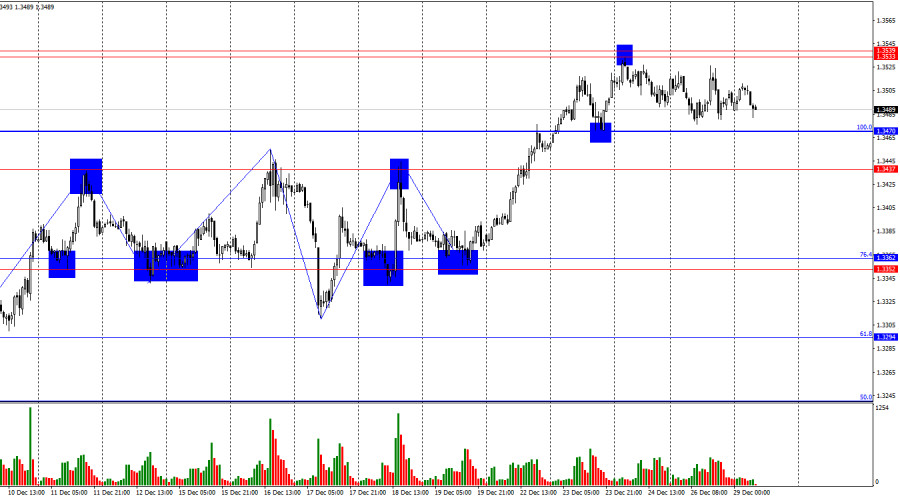
On the hourly chart, the GBP/USD pair on Friday continued its sideways movement between the Fibonacci level of 100.0% at 1.3470 and the resistance level of 1.3533–1.3539. A rebound from either of these levels will generate a trading signal in the opposite direction. A consolidation of prices below 1.3470 will increase the likelihood of a continued decline. A close above the 1.3533–1.3539 level will allow the bulls to launch a new attack.
The wave structure has once again transformed into a "bullish" one after the completion of the sideways phase. The most recently completed downward wave failed to break the previous low, while the new upward wave managed to exceed the previous peak. The news background for the British pound has been weak in recent weeks, but the information backdrop in the United States also leaves much to be desired. Bulls and bears were engaged in a tug-of-war throughout the week and remained in relative balance, but in the week leading up to the New Year, the bulls moved on the offensive.
There was no news background on Friday, but December news from the United States allowed bullish traders to move into a new offensive. In honor of the holidays, their enthusiasm and activity have faded somewhat, but after the New Year the offensive may resume. At this time, it is already appropriate to talk about the coming year, since during the current week there will be more holidays than working days. Of course, the market will be open on December 31, but who will be opening trades on New Year's Day? Thus, I believe that the sideways movement will persist until the end of the year, but if trading signals appear, traders may well act on them. The news background will be absent not only today but throughout the entire current week. Only technical (chart) analysis can help traders make trading decisions.
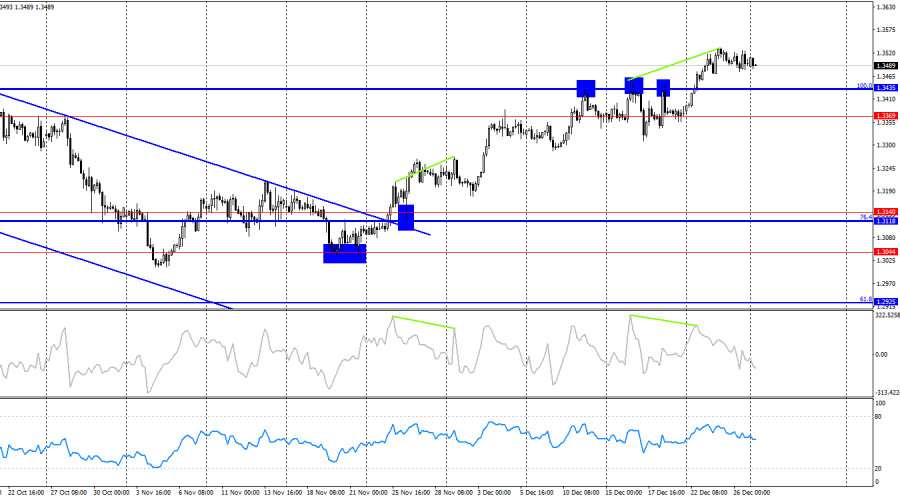
On the 4-hour chart, the pair has consolidated above the 100.0% corrective level at 1.3435, which allows for expectations of continued growth toward the next Fibonacci level of 127.2% at 1.3795. A "bearish" divergence has formed on the CCI indicator, which may trigger a reversal in favor of the U.S. dollar and a return to the support level of 1.3369–1.3435. A rebound from the 1.3435 level would increase the chances of continued growth for the British pound.
Commitments of Traders (COT) Report:
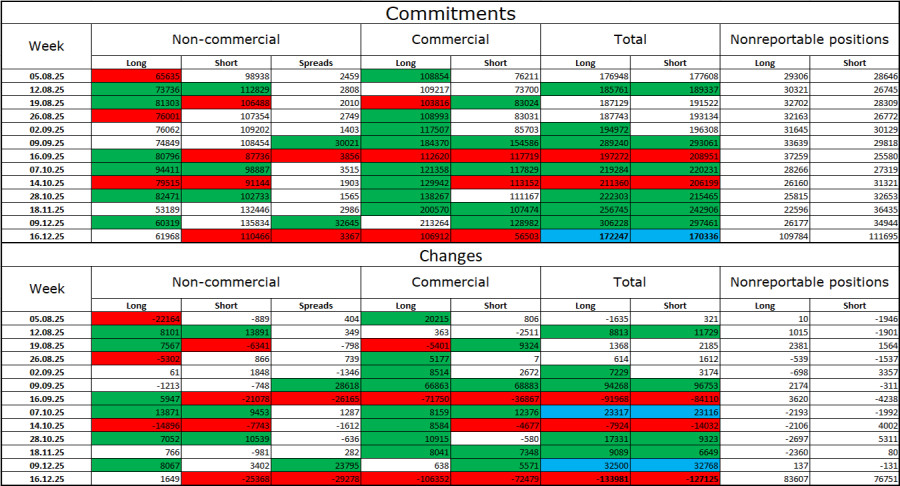
The sentiment of the "Non-commercial" trader category became more "bullish" over the latest reporting week. The number of long positions held by speculators increased by 1,649, while the number of short positions decreased by 25,368. The gap between the number of long and short positions currently stands at approximately 61 thousand versus 110 thousand. As we can see, bears dominate in December, but the British pound appears to have already exhausted its downside potential. At the same time, the situation with euro currency contracts is exactly the opposite. I still do not believe in a "bearish" trend for the pound.
In my view, the British pound still looks less "dangerous" than the dollar. In the short term, the U.S. currency may enjoy occasional demand in the market, but not in the long term. Donald Trump's policies have led to a sharp decline in the labor market, and the Federal Reserve has been forced to ease monetary policy to halt rising unemployment and stimulate job creation. For 2026, the FOMC does not plan strong monetary easing, but at present no one can be sure that the Fed's stance will not shift to a more "dovish" one during the year.
News Calendar for the U.S. and the U.K.:
On December 29, the economic calendar contains no scheduled events. The influence of the news background on market sentiment on Monday will be absent.
GBP/USD Forecast and Trading Advice:
Selling the pair was possible on a rebound from the 1.3533–1.3539 zone on the hourly chart, with a target of 1.3470. Short positions can be kept open. If the 1.3470 level is broken, short trades can be held with targets at 1.3437 and 1.3362. I can recommend buying on a rebound from the 1.3437–1.3470 level with a target of 1.3533–1.3539.
Fibonacci grids are drawn from 1.3470–1.3010 on the hourly chart and from 1.3431–1.2104 on the 4-hour chart.
LINKS RÁPIDOS
ForexMart is authorized and regulated in various jurisdictions.
(Reg No.23071, IBC 2015) with a registered office at First Floor, SVG Teachers Co-operative Credit Union Limited Uptown Building, Corner of James and Middle Street, Kingstown, Saint Vincent and the Grenadines
Restricted Regions: the United States of America, North Korea, Sudan, Syria and some other regions.







 Contate-nos