Akcie společnosti Pinewood Technologies Group (LON:PINE) v pátek vyskošily o více než 11 % poté, co společnost oznámila dohodu v hodnotě 150 milionů dolarů o koupi 51% podílu společnosti Lithia Motors Inc. (NYSE:LAD) v jejich severoamerickém společném podniku Pinewood North America LLC, čímž získala plné vlastnictví platformy a otevřela si cestu k rozšíření svého softwaru pro prodejce automobilů v USA a Kanadě.
Protiplnění bude uhrazeno vydáním 14 560 691 nových kmenových akcií v ceně 386,5 pence za akcii, na základě objemově váženého průměrného kurzu akcií společnosti Pinewood za 30 dní před oznámením ze dne 6. června.
Společný podnik, který byl založen 1. února 2024, byl zřízen za účelem společného vývoje a komercializace systému pro správu prodejců (DMS) společnosti Pinewood pro severoamerický trh.
Lithia Motors v současné době drží 51% podíl, zatímco Pinewood drží 49 %. Očekává se, že plné vlastnictví posílí pozici společnosti Pinewood na klíčovém rostoucím trhu a odstraní to, co společnost nazvala „konkurenční přetížením“, které odrazuje jiné skupiny prodejců, které se obávají přijetí platformy částečně vlastněné konkurenčním operátorem.
Akvizice by měla být dokončena ve třetím čtvrtletí roku 2025, s výhradou schválení akcionáři a souhlasu Úřadu pro finanční etiku (Financial Conduct Authority) se zveřejněním prospektu.
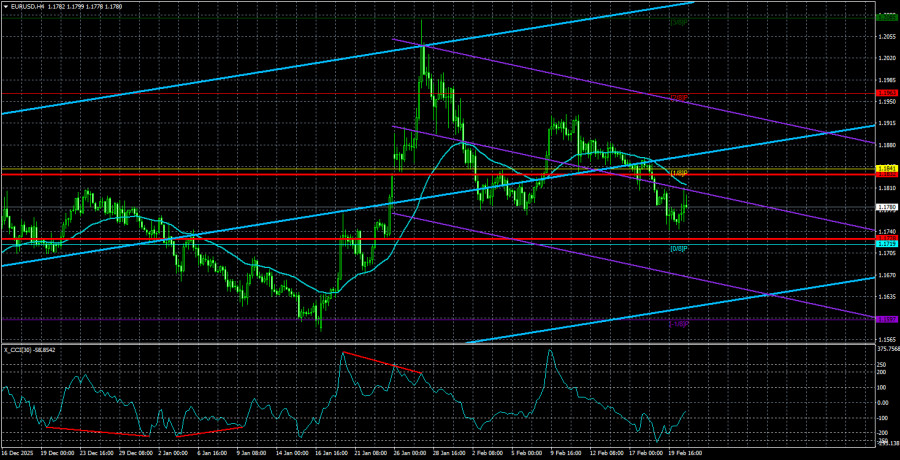
The EUR/USD currency pair showed minimal gains during Friday's trading, but the overall volatility was quite average. As mentioned, the market has largely ignored all the events from Friday, which is very strange. However, over the last two weeks, we've seen a number of unusual movements—specifically, a strange rise in the US currency.
On Friday, it became known that the US Supreme Court ruled that most of Donald Trump's trade tariffs were illegal, prompting the US president to say that all tariffs would remain in some form. However, on Saturday, Trump was more grounded in his statements. If on Friday he insisted that he would not accept the Supreme Court's decision and that all tariffs would be reinstated through other legislative acts, on Saturday, he announced that all tariffs he had introduced the day before would increase to 15% and replace the tariffs annulled by the court.
It should be noted that these tariffs are directed against entire nations, meaning they apply to almost all countries worldwide. The Supreme Court did not cancel industry-specific tariffs; they remain in effect. Consequently, American consumers will soon pay an additional 15% on all imported goods, in addition to a "surtax" embedded in the prices of goods subject to "industry tariffs." As expected, tariffs will continue to exist in one form or another. Meanwhile, Donald Trump has lowered taxes and plans to lower them again, something that the vast majority of Americans are unlikely to notice.
It is still unclear whether the US government plans to return all illegally collected fees to American companies and consumers. Trump stated that it wouldn't, as the Supreme Court's decision did not mention returning collected funds. However, if the tariffs were deemed illegal, such a development seems implied. Nevertheless, we have no doubt that no one intends to return thousands of dollars to the American people. Instead, Trump may end up suing again, this time regarding the return of funds. The last lawsuit lasted about nine months, and the next could take just as long.
Firstly, we are confident that the market will begin to digest another wave of negativity coming in an endless stream from the US. We have repeatedly stated that we expect only declines from the dollar, and any rise is at best a correction. Therefore, the question is merely when the current correction will be completed. There will be very few significant events in the Eurozone next week, but there are still a few things to note. In Germany, the third estimate of fourth-quarter GDP, the February unemployment rate, and February inflation data will be published. In the Eurozone, Christine Lagarde is scheduled to give a speech alongside the second estimate of January inflation. Some of the reports mentioned above may provoke market reactions, but traders are likely to focus the majority of their attention on US events.
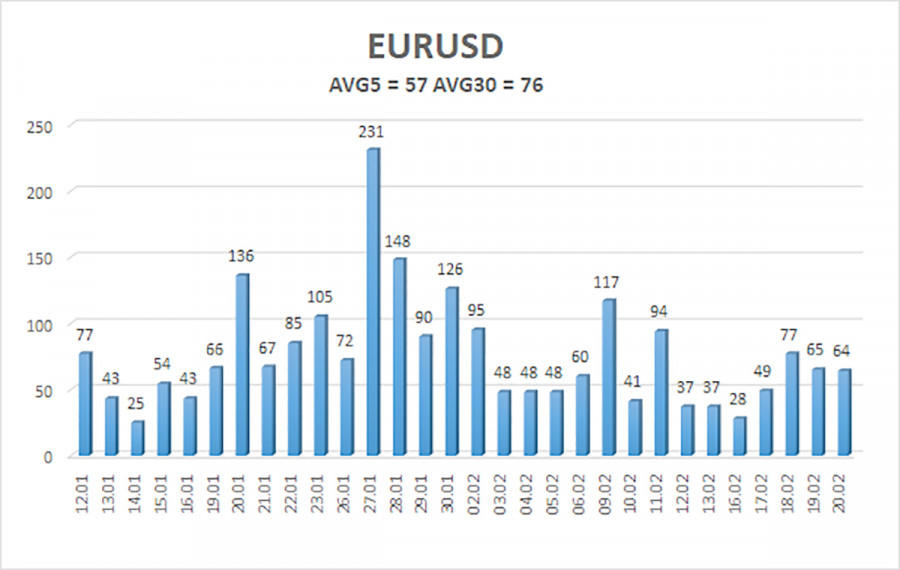
The average volatility of the EUR/USD pair over the last 5 trading days as of February 21 is 57 pips, which is characterized as "average." We expect the pair to trade between 1.1728 and 1.1832 on Monday. The upper channel of the linear regression points upward, indicating further growth for the euro. The CCI indicator has entered oversold territory, signaling a potential resumption of the upward trend.
S1 – 1.1719
S2 – 1.1597
S3 – 1.1475
R1 – 1.1841
R2 – 1.1963
R3 – 1.2085
The EUR/USD pair continues its correction within an upward trend. The global fundamental backdrop remains extremely negative for the dollar. The pair spent seven months in a sideways channel, and it is likely that now is the time to resume the global trend from 2025. For long-term growth, the dollar lacks a fundamental basis. Therefore, all the dollar can rely on is range trading or corrections. When the price is below the moving average, small short positions can be considered with targets of 1.1728 and 1.1719 on purely technical grounds. Above the moving average line, long positions remain relevant with targets of 1.1963 and 1.2085.

SZYBKIE LINKI
ForexMart is authorized and regulated in various jurisdictions.
(Reg No.23071, IBC 2015) with a registered office at First Floor, SVG Teachers Co-operative Credit Union Limited Uptown Building, Corner of James and Middle Street, Kingstown, Saint Vincent and the Grenadines
Restricted Regions: the United States of America, North Korea, Sudan, Syria and some other regions.









 Skontaktuj się z ForexMart