
Gold (XAU/USD) is posting moderate gains while encountering resistance at the 200-day exponential moving average (EMA). Several influential Federal Reserve officials have expressed concern about persistent inflationary risks, suggesting that further interest rate hikes may still be necessary. This, in turn, continues to support demand for the U.S. dollar and limits the precious metal's upside.
Federal Reserve Governor Lisa Cook stated that inflation remains unacceptably high and emphasized that she is prepared to act if the disinflation process slows, noting that the central bank cannot afford to wait indefinitely if price pressures fail to ease. Meanwhile, San Francisco Federal Reserve President Mary Daly said that policymakers need additional data before the September meeting to determine whether inflationary pressures are temporary or more persistent. Furthermore, according to the CME FedWatch Tool, financial markets currently assign roughly an 80% probability of at least one Federal Reserve rate hike by the end of the year, reflecting inflation risks associated with disruptions to global energy supplies.
In fact, the Iran-backed Houthi movement in Yemen reported missile attacks on a Saudi oil tanker off the coast of the Red Sea port city of Yanbu, as well as another strike in the Gulf of Aden. Nevertheless, investors continue to hope for a peace agreement between the United States and Iran and the reopening of the Strait of Hormuz, keeping oil prices near multi-week lows. 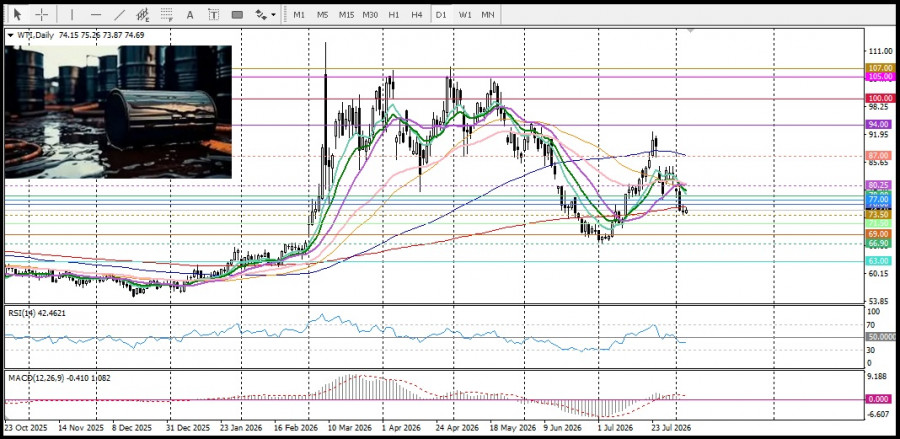 On Wednesday, Iran announced that it had finalized a draft agreement with Oman concerning this strategically important waterway, fueling optimism about a diplomatic resolution to the five-month conflict and potentially limiting any significant appreciation of the U.S. dollar.
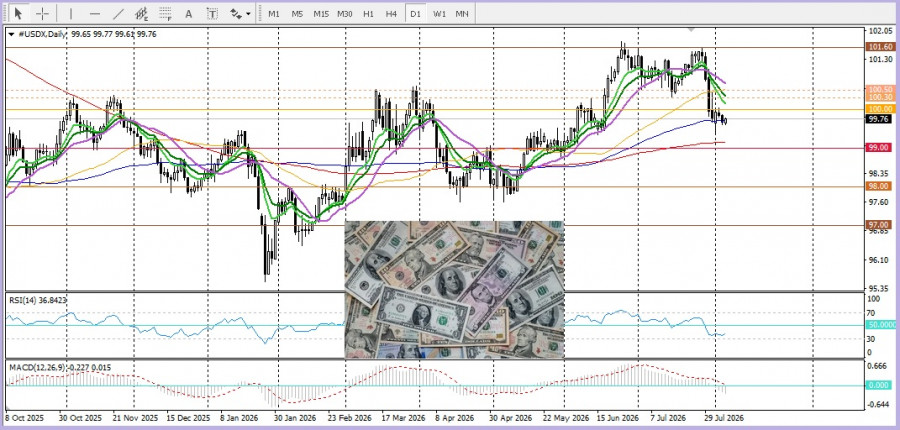 In addition, Automatic Data Processing (ADP) reported that U.S. private-sector employment increased by 44,000 jobs in July, indicating a notable slowdown from the revised increase of 98,000 in the previous month and falling short of analysts' expectations.
It is also worth noting the latest data from the Institute for Supply Management (ISM), which showed that the Services Purchasing Managers' Index (PMI) improved slightly to 54.1 in July but remained below the consensus forecast of 54.5. Following these weaker-than-expected reports, the market-implied probability of a Federal Reserve rate hike in September declined to approximately 55% from 67%, highlighting the need for caution among U.S. dollar bulls.
For better trading opportunities, it is advisable to wait for Friday's closely watched U.S. Nonfarm Payrolls (NFP) report, which is expected to provide additional insight into the future direction of Federal Reserve monetary policy. Before then, Thursday will bring the weekly U.S. Initial Jobless Claims report, which, together with comments from key FOMC members, could stimulate demand for the U.S. dollar. In addition, developments related to the Middle East crisis may increase volatility across global financial markets and influence gold prices.
From a technical perspective, the strong rally during the previous trading session, which pushed prices above the 50-day simple moving average (SMA) for the first time since March 17, provides a new bullish signal for XAU/USD. The Relative Strength Index (RSI), currently at 63, also points to strengthening bullish momentum on the daily chart. However, before considering additional long positions, traders should wait for a confirmed breakout above the 200-day EMA.
RYCHLÉ ODKAZY
ForexMart is authorized and regulated in various jurisdictions.
(Reg No.23071, IBC 2015) with a registered office at First Floor, SVG Teachers Co-operative Credit Union Limited Uptown Building, Corner of James and Middle Street, Kingstown, Saint Vincent and the Grenadines
Restricted Regions: the United States of America, North Korea, Sudan, Syria and some other regions.









 Kontaktujte nás