
The EUR/USD pair is firmly holding above the 1.1450 mark during Thursday's morning session, consolidating its growth demonstrated over the last two days and reaching a level not seen since June 19.
The U.S. dollar is struggling to attract significant buying, trading near a four-week low reached on Wednesday after the release of U.S. producer price index (PPI) data.
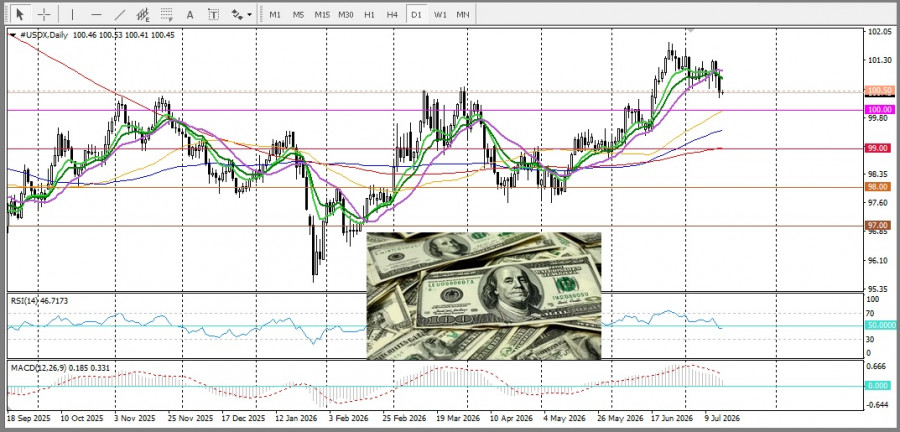
According to the U.S. Bureau of Labor Statistics (BLS), the PPI unexpectedly decreased by 0.3% in June. This comes amid disappointing consumer price index (CPI) data published on Tuesday, further prompting traders to lower their expectations regarding an imminent interest rate hike by the Federal Reserve. Consequently, these expectations are holding back dollar bulls, which in turn favors the strengthening of the EUR/USD pair.
Additionally, the conflict between the U.S. and Iran has escalated since the beginning of this week: on Wednesday, U.S. forces began a new phase of airstrikes against Iranian missile and drone infrastructure. In response, Iran launched drone and missile attacks on U.S. naval facilities in the region. Contributing factors include the U.S. naval blockade of Iranian ports and the closure of the Strait of Hormuz, which help keep oil prices high.
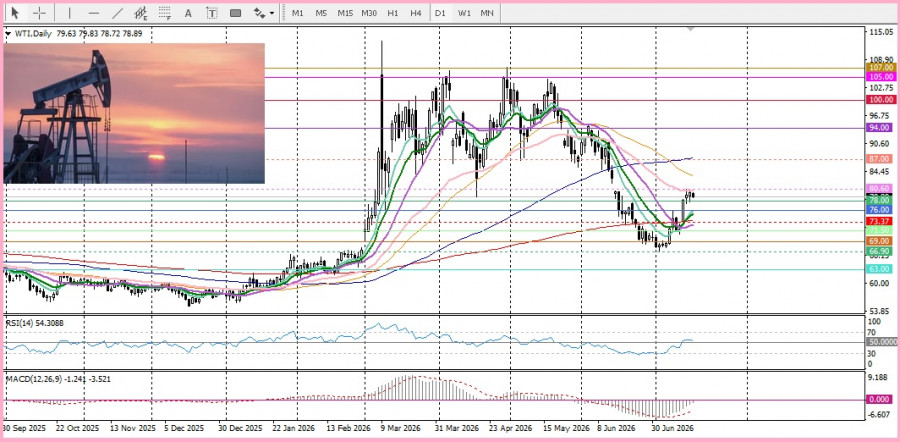
This intensifies inflation concerns stemming from rising energy costs and activates hawkish expectations for the Fed, thereby limiting the dollar's decline and restraining the growth of the EUR/USD pair.
Today, for better trading opportunities, it is worth waiting for economic data from the U.S., including monthly retail sales reports, the manufacturing activity index from the Philadelphia Federal Reserve, and the standard weekly initial unemployment claims data. These data, along with comments from key FOMC members, will boost demand for the U.S. dollar and lend momentum to the EUR/USD pair. However, the aforementioned mixed macroeconomic situation calls for increased caution before opening new bullish positions and anticipating further growth.
From a technical perspective, the pair has crossed above the 20-day SMA on the daily chart, which now provides support. This is a positive sign for bulls. At the same time, oscillators are mixed, but the relative strength index has slightly moved into positive territory, confirming a good start for bulls. However, to significantly shift the bearish bias in favor of bulls, they need to establish themselves above the 200-day SMA.

RYCHLÉ ODKAZY
ForexMart is authorized and regulated in various jurisdictions.
(Reg No.23071, IBC 2015) with a registered office at First Floor, SVG Teachers Co-operative Credit Union Limited Uptown Building, Corner of James and Middle Street, Kingstown, Saint Vincent and the Grenadines
Restricted Regions: the United States of America, North Korea, Sudan, Syria and some other regions.









 Kontaktujte nás